A week ago, far from the madding crowds of Sabang in Midnapore, Nishikanta Das, a Madur craftsman, packed his bags and travelled the furthest he had ever been. The following Sunday in a parallel universe far from home, he set out his enormous labour of love, his Madurs across two small tables and patiently answered every question asked of him. In between he was often silent, his mind wandered. The next day he left, leaving behind a weave of words, memories and floor mats across homes in England and Wales.
Madur
Madur is a long afternoon siesta on the terrace in the winter sun; Madur is a Nancy Drew hustled inside a Geography book before the half-yearly exam; Madur is an escape on sweaty summer evenings; Madur is a familiar shout, ‘Boddo mosha, hath pakha-ta niye ashish’ on load-shedding evenings; Madur is Bibidha-Bharati under a moonless sky; Madur is Sanibarer Baarbela, anko-kosha; Madur is I.
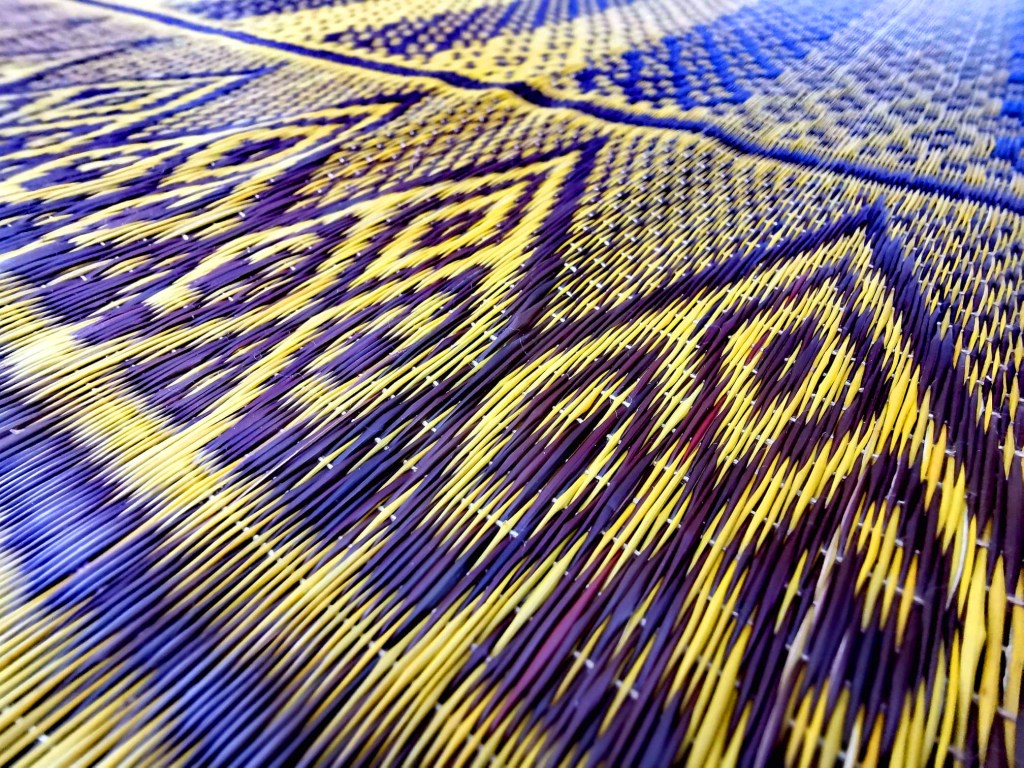
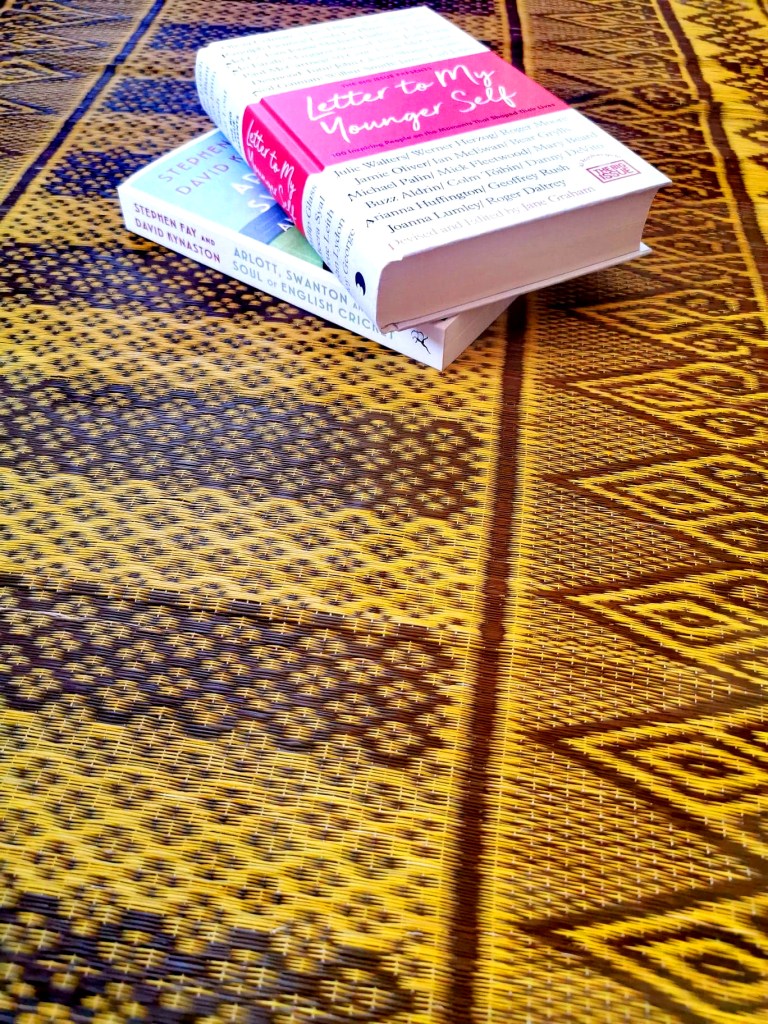
Madur is a reed mat, the reed grows plenty in Midnapore plains; after a dye, warp and weft it’s sold wholesale around the state; in the days I was Nancy Drew I never gave Madur much thought, Madur was common, Madur was everywhere, Madur was rarely an item sought; then one day when I finished with Nancy I looked around me, there were hardly any Madurs left in the homes I went to tea; Where have all the Madurs gone? I never cared to ask, for I never missed, I never realised they were the past… But Madur has been around a fair few years more than me; Madur was Masland, Madur was Mataranchi, Madur was as ‘regal’ as it could be… For in the year 1744, Alivardi Khan decreed, ‘From today in my Jagir everyone pays a Masland fee!’… and so fine Madur became revenue, it’s worth its weight in gold; Plassey wept and Kipling swept, his words under a Madur floor.
Today, Madur is a dhoti-clad Nishikanto Babu waiting silently in the wings; Madur is Fagun Fest, a re-purposed church hall in Hammersmith; Madur is ‘Apni Sabang theke? Amar shoshurbari Dantan’; Madur is a Mataranchi artist standing tall amidst his art, a little bewildered, a little shocked that he sold nearly all he brought, ‘Eto bikri hobe, ami bhabini, Bouma jodi dekhto’; I ask about his Bouma and he says with a pause; ‘Bouma amar Engreji-te MA, Sabang-e to ghor-e ghor-e Madur bon-e, o tai eta thik mene nite pareni, chele-ke ei line-e aste daye naa! Tai ami gram-er lok-der train kori…’; Madur is a shy smile, of travelling and returning home all at once; Madur is a timeless weave since the days of Alivardi Khan; Madur is still a Nancy Drew and a siesta in the sun.
London, February 2019
 Swagata Ghosh